How to Choose Realistic Artificial Roses
There are many types of artificial roses on the market. Some are cheap, while others are much more expensive.
But a higher price does not always mean better quality. A lower price does not always mean a product is bad either.
For wholesalers, wedding decorators, florists, and retailers, knowing how to spot a realistic artificial rose is more important than simply looking at the price.
So what should you look for? Here are the key details that can help you tell the difference between a high-quality artificial rose and a low-quality one.
What Makes an Artificial Rose Look Real?
Many people think color is the most important factor, but it is only one part of the picture.
A realistic artificial rose usually has:
- Natural-looking petals
- Realistic colors
- Good flower shape and layering
- High-quality leaves and stems
- The right material
When all of these details work together, an artificial rose can look surprisingly close to a real flower.
Check the Petal Texture
The petals are often the easiest way to judge quality.
1. Surface Texture
Real rose petals are not perfectly smooth. If you look closely, you can see small veins and natural texture on the surface.
The texture of a real rose


High-quality artificial roses usually copy these small details to make the petals look more realistic.
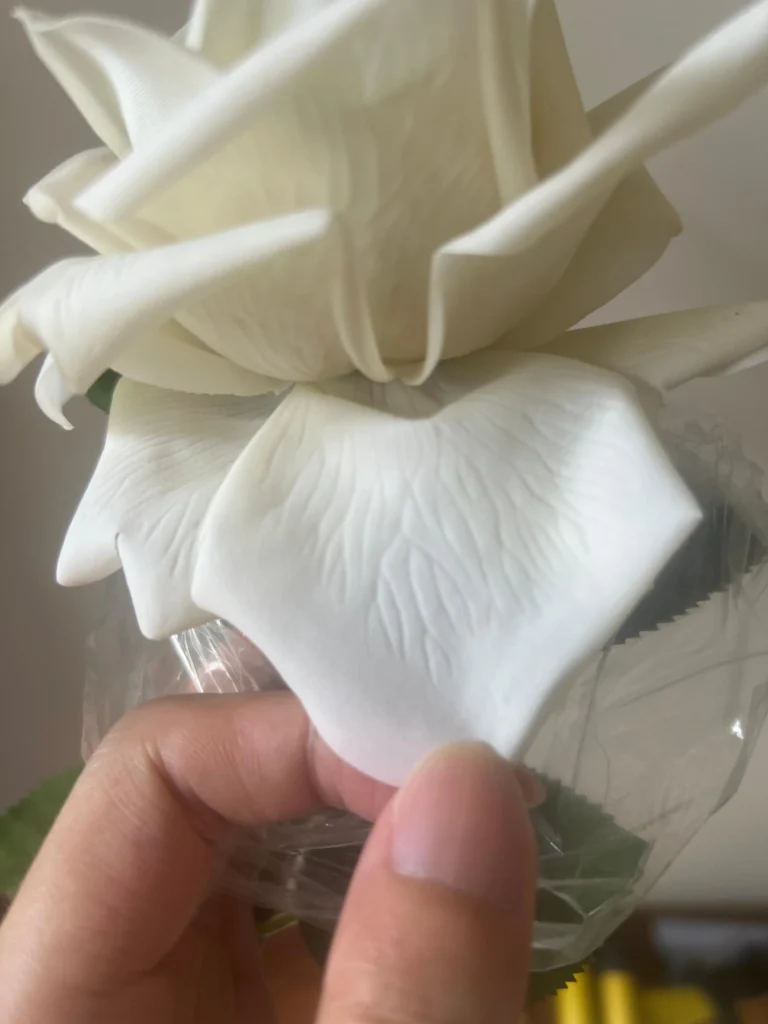
Low-quality petals are often completely smooth and look more like plastic than real flower petals.
2. Touch and Feel
Looks are important, but touch matters too.
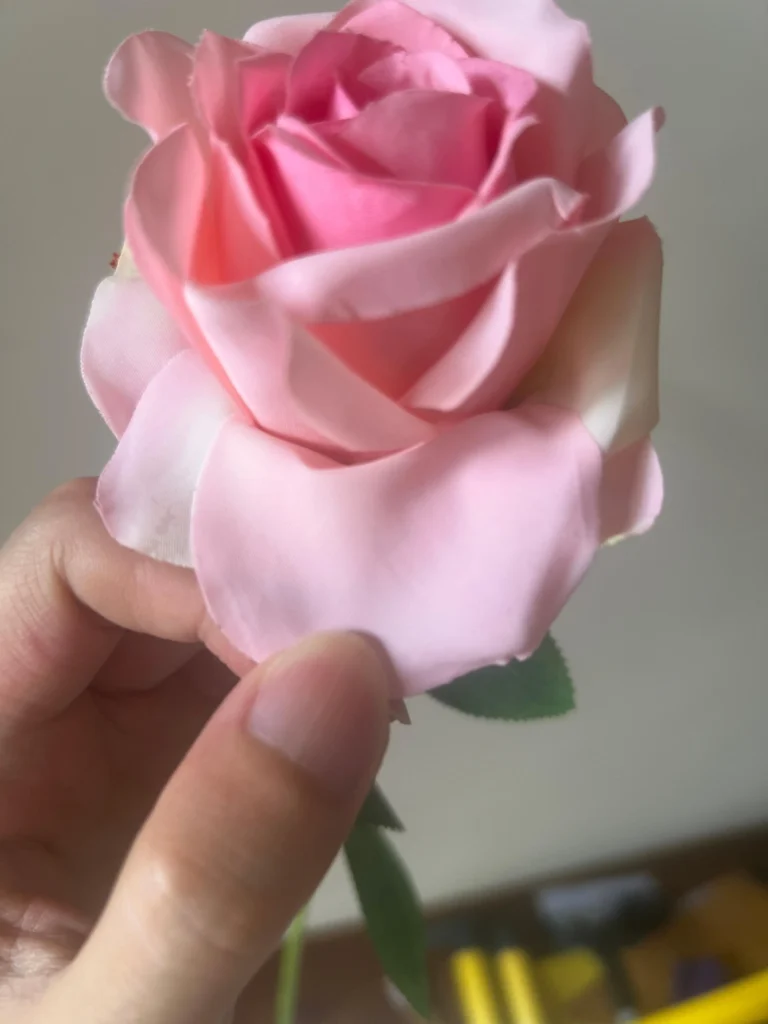
Good artificial rose petals should feel soft and natural. They should bend easily without feeling stiff.
Low-quality petals often feel hard, rough, or plastic-like.
When checking a sample, gently bend a petal. A good petal should keep a natural curve instead of snapping back into a perfectly straight shape.
Some high-end artificial roses have a soft coating that gives the petals a cool and slightly moist feel, similar to a real flower.
3. Petal Edges
Petal edges are a small detail, but they can make a big difference.
In a real rose, no two petals look exactly the same. Some edges are slightly curled, while others have small natural variations.
High-quality artificial roses copy these details to create a more natural look.
Low-quality roses often have petals with identical shapes and curves, making the flower look machine-made.
When checking a flower, look closely at the edges. If every petal looks exactly the same, the flower may not look very realistic.
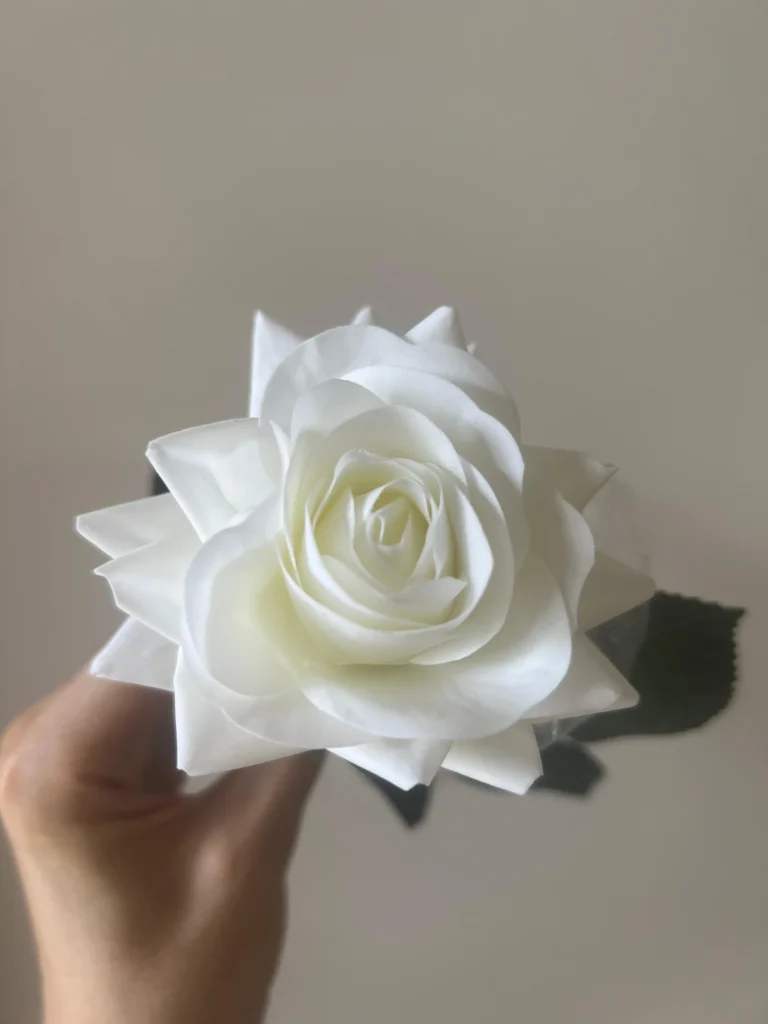
Second, check the petal edges. They should be clean and smooth, without any rough edges.
rough edges.
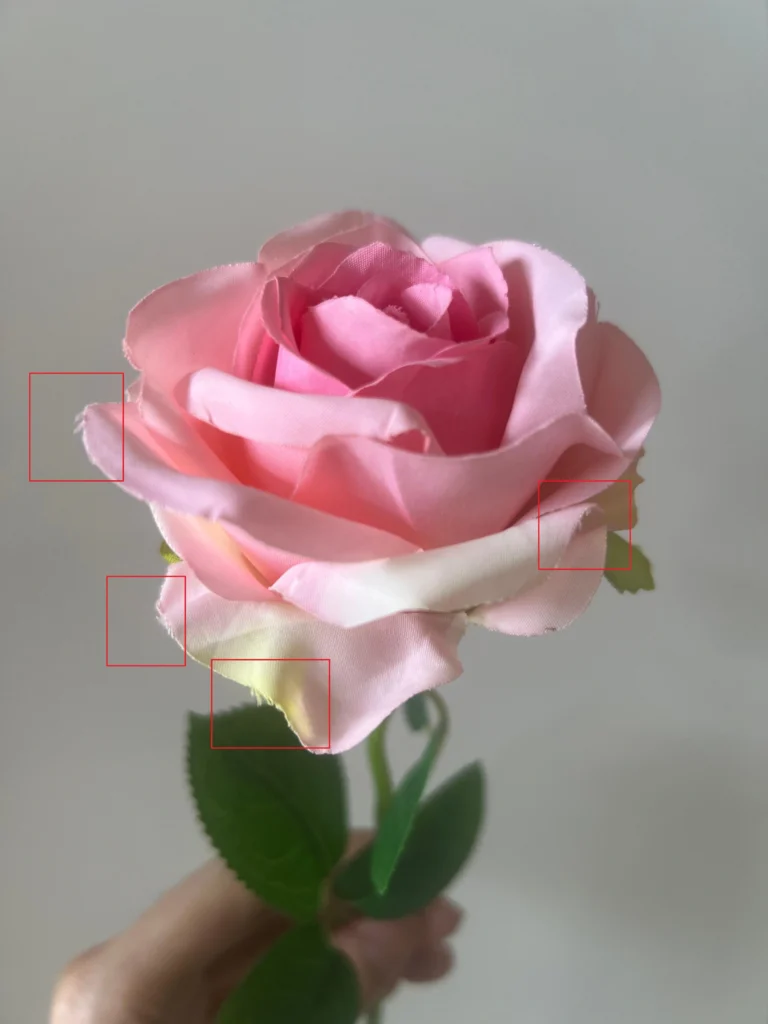
clean and smooth edges.
4. Petal Thickness
Petal thickness is another important detail.
Real rose petals are not too thin and not too thick. They also allow a little light to pass through, giving them a soft appearance.
High-quality artificial petals try to create the same effect.
Low-quality petals are often thicker and less transparent. They can look heavy and plastic-like.
A simple test is to hold the flower under natural light. If the petals look thick and completely block the light, the flower may look less realistic.
Look for Natural Color Changes
Real roses rarely have only one color.


Low-quality artificial roses often use one flat color, making the flower look dull and fake.
High-quality roses usually have natural color changes, such as:
- A darker center and lighter outer petals
- A lighter center and darker outer petals
- Soft shading around the petal edges
There is no single color pattern that every rose follows.
The important thing is that the colors look natural and have depth.
Check Individual Petals
Color changes should not only appear across the whole flower.
Real rose petals often have slight color differences within each petal.

For example:
- The base may be lighter
- The center may be darker
- The edges may have soft color shading
High-quality artificial roses often copy these details with gentle color transitions.
Low-quality petals usually have one strong color with no variation, making them look less realistic.
Check the Flower Shape and Petal Layering
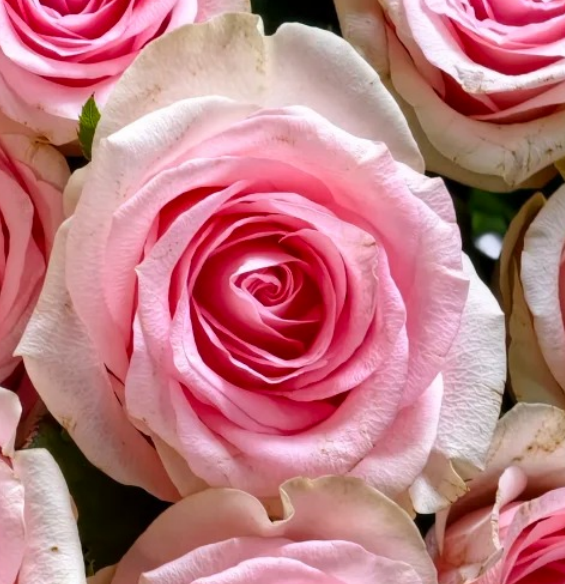
Some artificial roses look good from far away but look fake when viewed up close.
One reason is the flower shape.
Real roses are not perfectly symmetrical.
The center petals are usually tighter, while the outer petals open gradually. This creates depth and makes the flower look more natural.
When checking flower shape, look for:
- Petals that do not appear overly uniform
- A naturally formed and well-defined center
- Visible depth and natural petal layering
- A full, three-dimensional bloom
Real roses are naturally imperfect. If every petal looks identical, the flower may appear artificial.
Check the Leaves and Stem
Many buyers focus only on the flower head, but leaves and stems are important too.
Leaves
Good-quality leaves should have:
- Natural leaf veins
- A matte finish instead of a shiny plastic look
- Clean edges
- Slight differences in size and shape
Overly shiny leaves with a plastic appearance looks unnatural.
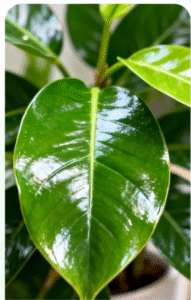
matte surface texture looks more nature.
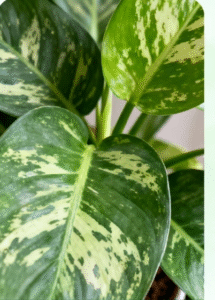
Leaves with no visible veins or color variation
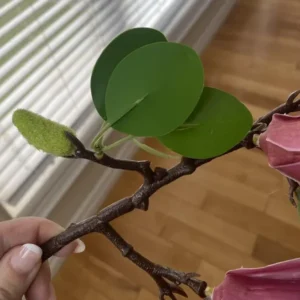
Real leaves are never exactly the same.
High-quality artificial leaves often have small differences in color, shape, and angle to create a more natural appearance.
Some leaves may be a lighter green, while others are darker, just like real plants.
Low-quality leaves are often all the same size and color, making them look fake.
Stem
A realistic stem should have a natural thickness and a slight curve.
Some high-quality stems even include small details such as stem joints or thorns.
The surface should look natural, not shiny like plastic.
Also check where the flower head connects to the stem.
Look for:
- Excess glue
- Rough edges
- Visible seams
- Exposed wires
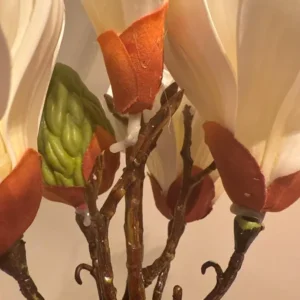
These details can have a big impact on how realistic the flower looks.
Choose the Right Material
The material affects both the appearance and feel of the flower.
Silk Roses
Silk flowers are one of the most common options.
Pros:
- Lower cost
- Many color choices
- Good for large orders
Cons:
* Less realistic to touch
PU / Latex (Real Touch) Roses
Real-touch roses are becoming more popular, especially in the high-end market.
Pros:
- Feel closer to real petals
- Soft and flexible
- Slightly cool and natural to the touch
- More realistic details
- Great for weddings, displays, and premium floral arrangements
Cons:
- Higher cost
- Can age faster in strong sunlight
Choose the material based on your market, budget, and customer needs.
Common Signs of Low-Quality Artificial Roses
Be careful if you notice these problems:
- Only one flat color throughout the flower
- Thick, shiny petals with a plastic look
- Flower shapes that are too perfect or symmetrical
- Simple flower centers with little layering
- Leaves with no texture or color variation
- Shiny stems with visible seams or wires
- Excess glue or rough finishing
These are common signs of low-quality artificial roses.
Tips for Wholesale Buyers
If you are buying artificial roses in bulk, do not rely only on product photos.
Before placing an order:
- Ask for samples from different suppliers.
- Check the flowers under natural light.
- Look at the whole flower, not just the flower head.
- Check for glue marks, seams, and other quality issues.
- Gently press the flower head to see if it returns to its original shape.
For most buyers, the three most important things to check are:
- Petal texture
- Natural color variation
- Flower shape and layering
These details often make the biggest difference between a realistic artificial rose and a low-quality one.